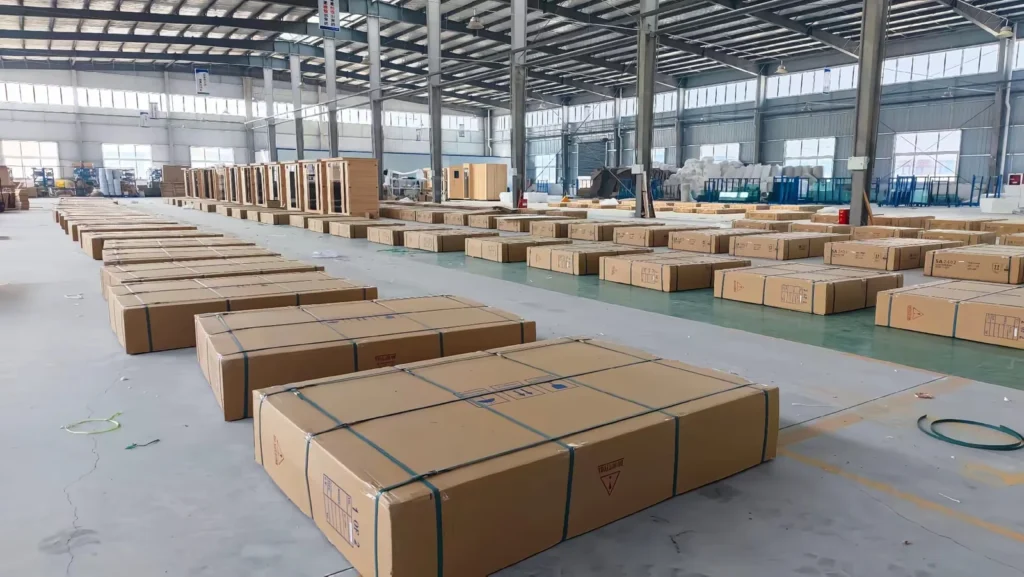
Direct answer: A usable sauna RFQ states the buyer and project type, destination market, product category, quantity, drawings or dimensions, electrical conditions, materials, control functions, branding and packaging scope, target schedule and required documents. Parameters that can change the design must be fixed before quotation; commercial details such as final packaging artwork can usually follow.
Who should use this checklist
Use it if you are preparing to send a project to a sauna manufacturer and you want comparable quotations. It suits distributors, hotel and spa project buyers, engineering contractors, residential developers and private-label brands. It also works as an internal document: fill it in once and reuse it for every supplier you approach.
If the product category is still open, review the product range first — graphene far infrared saunas, graphene heating systems, steam sauna rooms and outdoor saunas are quoted against different inputs.
What a valid sauna RFQ must contain at minimum
A request that can be quoted without a second round of questions normally includes:
- Buyer and project identification: company, contact, project type and location.
- Product category and intended application, with user capacity.
- Destination market, including electrical conditions.
- Dimensions, drawings or the installation space available.
- Material, glazing and control direction.
- Estimated order quantity, sample requirement and target schedule.
- Required certificates, reports and languages.
- Inspection, acceptance and spare-part expectations.
- A clear list of points that are still open.
What must be fixed before quotation, and what can follow
| Parameter | When it must be fixed | Why it matters |
|---|---|---|
| Destination market, voltage, frequency, plug | Before quotation | Defines the electrical design and documentation path |
| Product category and capacity | Before quotation | Determines enclosure, heating architecture and layout |
| External and internal dimensions | Before quotation | Drives material quantities, packaging and shipping volume |
| Heating technology and rated power | Before quotation | Changes the electrical load, controls and safety functions |
| Order quantity and target schedule | Before quotation | Affects planning, packaging and unit cost |
| Final packaging artwork and manual wording | Can follow | Commercial detail that does not change the product design |
| Exact wood shade or hardware finish | Can follow | Confirmed against approved samples during project definition |
| Optional accessories | Can follow | Can be listed separately as options |
Why images alone do not produce a reliable quotation
A photograph shows an appearance, not a configuration. Two cabins that look identical can differ in wood thickness, insulation, heater capacity, panel layout, controller, wiring, glazing specification and packaging. Without dimensions, electrical conditions and material requirements, a supplier can only quote a guess, and the guess will be revised once the real information arrives. Sharing drawings, a dimensioned sketch or even a marked-up reference photo with measurements already removes most of that risk.
Why the target market changes electrical and compliance requirements
Voltage, frequency, plug type, circuit protection, earthing and wiring rules differ between markets, and so do the standards and documents required for the finished product. That is why the destination country is one of the first questions in any serious RFQ. Naming the market also lets the supplier flag which documents can be provided with the model and which must be arranged by the buyer or a local representative. See the technology overview for how heating architecture is defined, and OEM and ODM manufacturing for how documentation is handled in a programme.
The sauna project specification and RFQ checklist
| Field | What to state | If not available yet |
|---|---|---|
| Buyer and company information | Company name, country, contact person, role in the project | State whether you are the end user, distributor or contractor |
| Project type | Hotel, spa, gym, residential development, distribution, private label | Describe the intended business model |
| Target market | Destination country and, if known, the state or region | Give the shortlist of markets being considered |
| Product category | Far infrared cabin, Finnish sauna, steam room, outdoor unit, heating component | State which categories are being compared |
| Intended application | Residential, commercial, hospitality, or resale | Describe how the product will be used |
| User capacity | Number of users per session | Give a range |
| External dimensions | Length, width, height, and any access restriction | Provide available installation space or drawings |
| Internal dimensions | Seating or bench layout, headroom, door direction | Mark as to be confirmed during design |
| Installation environment | Indoor or outdoor, climate, floor condition, moisture exposure | Describe the site conditions |
| Heating technology | Infrared panels, stone heater, steam generator, heating component | State the preference and ask for a comparison |
| Voltage, frequency and plug | Destination supply, phases, plug or connection type | Mark as market-dependent and confirm early |
| Rated power requirement | Any limit from the site or the market | State the available capacity instead of a value |
| Wood, glass and hardware | Wood species, finish, glazing type, hardware finish | Give a direction and request samples |
| Interior materials | Bench, backrest, insulation, flooring, lighting | List the preferences and any prohibited materials |
| Controller and functions | Interface, language, timer, sensor and safety expectations | State the required functions only |
| Temperature and operating requirements | Operating range and usage pattern expected at the site | Confirm against the approved model specification |
| Branding and private label | Logo position, labels, manuals, language | State whether branding is required at all |
| Packaging requirements | Export carton, pallet, retail packaging, labelling | Mark as to be confirmed before production |
| Estimated order quantity | Sample, pilot and expected annual volume | Give a range and the assumptions behind it |
| Sample requirement | Whether a prototype, engineering sample or pilot run is needed | State if the sample decision depends on the quotation |
| Target delivery schedule | Required delivery window and any fixed deadline | State the drivers, such as an opening date |
| Required certificates and reports | Standards, documents and languages needed for the market | List what your compliance adviser has requested |
| Drawings and reference files | Available drawings, sketches, photos with dimensions | State when the drawings can be shared |
| Inspection and acceptance criteria | Inspection stage, defect classification, remedy | Ask the supplier to propose a plan |
| Spare parts, warranty and shipping | Spare-part list, warranty expectation, Incoterms, destination | Provide the destination port or city at minimum |
| Information still awaiting confirmation | An explicit list of open points | Always include this section |
How to send the checklist
Send it as a single document or email in the order shown above, with the open points in their own section. Ask each supplier to reply in the same order and to state any assumption behind their numbers. This makes two quotations comparable and shows quickly which supplier has actually read the requirements.
Inspection, acceptance, spare parts and warranty
State your expectations before the first order rather than after delivery:
- Which inspection stages you require, and who pays for them.
- How a defect is classified and what remedy applies to each class.
- Which spare parts you want shipped with the order and how they are identified.
- What warranty support looks like in your market, including who handles claims.
- How damage in transit is documented and resolved under the agreed Incoterms.
Common RFQ mistakes
- Sending a picture without dimensions, market or quantity.
- Requesting a price before the product category is chosen.
- Leaving the destination market out of the request.
- Mixing must-have requirements with optional wishes in one list.
- Hiding open points instead of listing them, which turns them into assumptions.
- Asking for a fixed lead time before the schedule drivers are known.
Next step
Fill in the fields you know, mark the rest as open, and send the same version to each supplier you are evaluating. If the product category is still undecided, read the infrared versus traditional sauna comparison for commercial buyers first. If you are choosing between suppliers, use how to choose an OEM sauna manufacturer alongside this checklist. When the file is ready, send it through the inquiry form and the remaining technical points can be resolved during project definition.
Frequently asked questions
What is the minimum information needed for a sauna quotation?
Product category, target market with electrical conditions, dimensions or drawings, quantity, material and control direction, and the delivery schedule. Without these, a supplier can only provide an indicative figure.
Which parameters can be confirmed after the first quotation?
Packaging artwork, manual wording, exact wood shade, hardware finish and optional accessories usually can. They affect commercial details rather than the engineered configuration.
Which parameters must be fixed before a quotation is issued?
Destination market and electrical conditions, product category, capacity, dimensions, heating technology and rated power limits, and the order quantity range. These change the design, the electrical load and the cost structure.
Why can a supplier not quote from photographs alone?
Because appearance does not define configuration. Wood thickness, insulation, heater or panel specification, controls, wiring and packaging all vary behind a similar-looking product, and each one changes the price.
Why does the target market affect the electrical and compliance requirements?
Voltage, frequency, plug type, circuit protection and wiring rules differ by market, and so do the standards and documents required for the finished product. Naming the market lets the supplier design and document the product correctly.
Should open points be listed in the RFQ?
Yes. Listing them as open questions prevents a supplier from filling the gaps with assumptions and reduces the number of quotation revisions.
How should inspection and acceptance criteria be agreed?
State the inspection stages, the defect classification and the remedy for each class in writing before the first order, and ask the supplier to confirm the plan in the quotation.